
Marine Construction
Tōtika prequalified contractors delivering wharves, jetties, seawalls, marinas, and pile repairs. Supported by ADAS Level 3 divers, certified skippers, and a mobile barge fleet for projects across Tauranga, Bay of Plenty, Waikato, Rotorua Lakes and beyond.
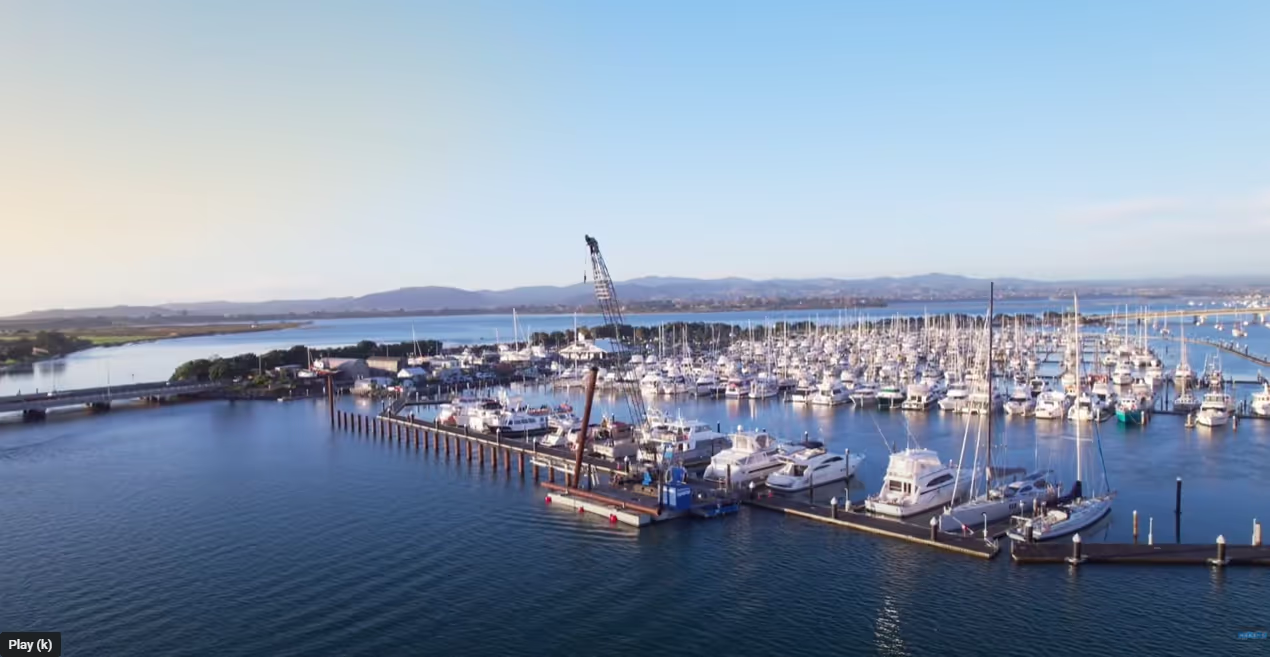
Specialists in Marine and Construction
At Bay Marine Works, we bring over 15 years of experience in both land and water-based construction. Our team is dedicated to delivering high-quality craftsmanship, innovative solutions, and exceptional results across all aspects of marine and residential building.
Marine Construction
We provide a full range of marine construction services, including:
- Retaining walls, silt fences, and slip clearance
- Wharf design, consenting, and construction
- Over-water timber piling and in-water concreting
- Pile jackets and casing — design, sourcing, and installation
- Floating jetties, ramps, and gangways
Whether it’s new infrastructure or maintenance and upgrades to existing marine assets, our team ensures every project is completed with precision and compliance to environmental and safety standards.
Residential and Land-Based Construction
Our land-based construction services include:
- New builds and renovations
- Decking, retaining walls, fencing, and pergolas
We combine technical skill with design versatility to create spaces that are both functional and visually appealing.
Our Commitment
We work closely with trusted local suppliers, fabricators, and contractors to source the highest-quality materials and expertise for each project. Our collaborative approach ensures every detail—from design to completion—meets your expectations for durability, safety, and style. At Bay Marine Works, we don’t just build structures — we build lasting relationships and environments that stand the test of time.
Expert Marine Builders for Wharves, Jetties, and Coastal Infrastructure
Bay Marine Works Ltd provides professional marine construction services throughout Tauranga, Bay of Plenty, Waikato, Rotorua Lakes and across New Zealand. From wharf construction to specialist marine structures, our team brings over a decade of experience building and maintaining infrastructure on, in, and around the water. If it touches the water, we can build it.
Why Choose Bay Marine Works for Marine Construction?
Marine construction demands more than standard building skills-it requires understanding tidal conditions, marine environments, weather patterns, and specialised construction techniques that work in water. As qualified commercial divers, certified skippers, and experienced marine builders, we deliver projects that withstand the harsh marine environment while meeting all regulatory requirements.
What Sets Our Marine Construction Team Apart
Comprehensive Marine Capabilities: We don't just build above the water-our commercial diving qualifications mean we handle complete projects from underwater foundations to finished structures. This integrated approach saves time, reduces coordination issues, and ensures quality throughout every phase.
Proven Track Record: Trusted by Tauranga City Council, Bay of Plenty Regional Council, Port of Tauranga, HEB Construction, Fulton Hogan, Bellingham Marine, and major infrastructure companies throughout New Zealand. Our portfolio includes wharves, jetties, seawalls, marinas, and specialist marine structures across the country.
Specialised Equipment Fleet: Our Webster barge, Quest crane barge, workboats, and commercial diving equipment provide the tools needed for complex marine construction projects. This equipment is transportable nationwide, bringing full capabilities to your project location.
Tōtika Prequalified: We're Tōtika prequalified contractors, demonstrating our commitment to health and safety management systems that meet the highest standards for infrastructure projects.
Maritime NZ Certified Skippers: All vessel operations are conducted by Maritime NZ certified skippers - ensuring safe, compliant marine operations throughout construction.
Our Marine Construction Services
Wharf Construction
Building a wharf requires precise engineering, understanding of marine conditions, and expertise in pile driving, structural installation, and deck construction. We handle complete wharf projects from initial piling to finished decking and handrails.
Structural Piling: Installing timber, concrete, or steel piles to create stable foundations for wharves and jetties. We work in various seabed conditions, adapting pile-driving techniques to achieve proper depth and stability. Our commercial diving capabilities allow underwater inspection and adjustment during installation to ensure each pile meets specifications.
Wharf Decking & Platforms: Once piling is complete, we construct deck platforms using treated timber, composite materials, or steel grating depending on intended use and budget. Deck construction considers load requirements, drainage, and safety features including non-slip surfaces where appropriate.
Handrails & Safety Features: All wharves require proper edge protection and safety features. We install compliant handrails, bollards, cleats, and access ladders that meet building codes and maritime safety standards.
Access Ramps & Gangways: Where shore access is required, we design and install access ramps or gangways with proper slope calculations for tidal variation. These can include floating components that rise and fall with the tide, or fixed structures with sufficient height clearance.
Utility Integration: Modern wharves often require water, power, and lighting infrastructure. We coordinate with electrical and plumbing contractors to integrate utilities into the wharf structure, providing service points for vessels or maintenance activities.
Jetty Construction & Repair
Jetties serve as critical access points for vessels, recreational areas, and commercial operations. Whether you need a small private jetty or a substantial commercial structure, we deliver projects that balance functionality, durability, and aesthetics.

Private Residential Jetties: For waterfront property owners, we design and build jetties that complement your property while providing secure vessel access. These projects consider tidal range, seabed conditions, council consent requirements, and your specific needs for boat access, swimming platforms, or entertainment areas.
Commercial & Public Jetties: Larger jetties for marinas, boat clubs, or public access require additional structural capacity and regulatory compliance. We work through consent processes, engineer structures for higher loads and traffic, and include features like lighting, seating, and fishing platforms where specified.
Heritage Jetty Restoration: Older jetties with heritage significance require careful restoration that respects original construction while meeting modern safety standards. We assess existing structures, replace deteriorated components, and reinforce where necessary while maintaining the character of historical marine structures.
Floating Jetties: In locations with significant tidal range, floating jetty systems provide consistent vessel access height. We install pontoon-based systems with secure anchoring, appropriate flex joints, and gangways designed for the tidal range in your location.
Seawall Construction & Coastal Protection
Coastal properties and infrastructure need protection from wave action, erosion, and storm damage. Our seawall construction services provide engineered solutions that protect land while managing marine environmental considerations.
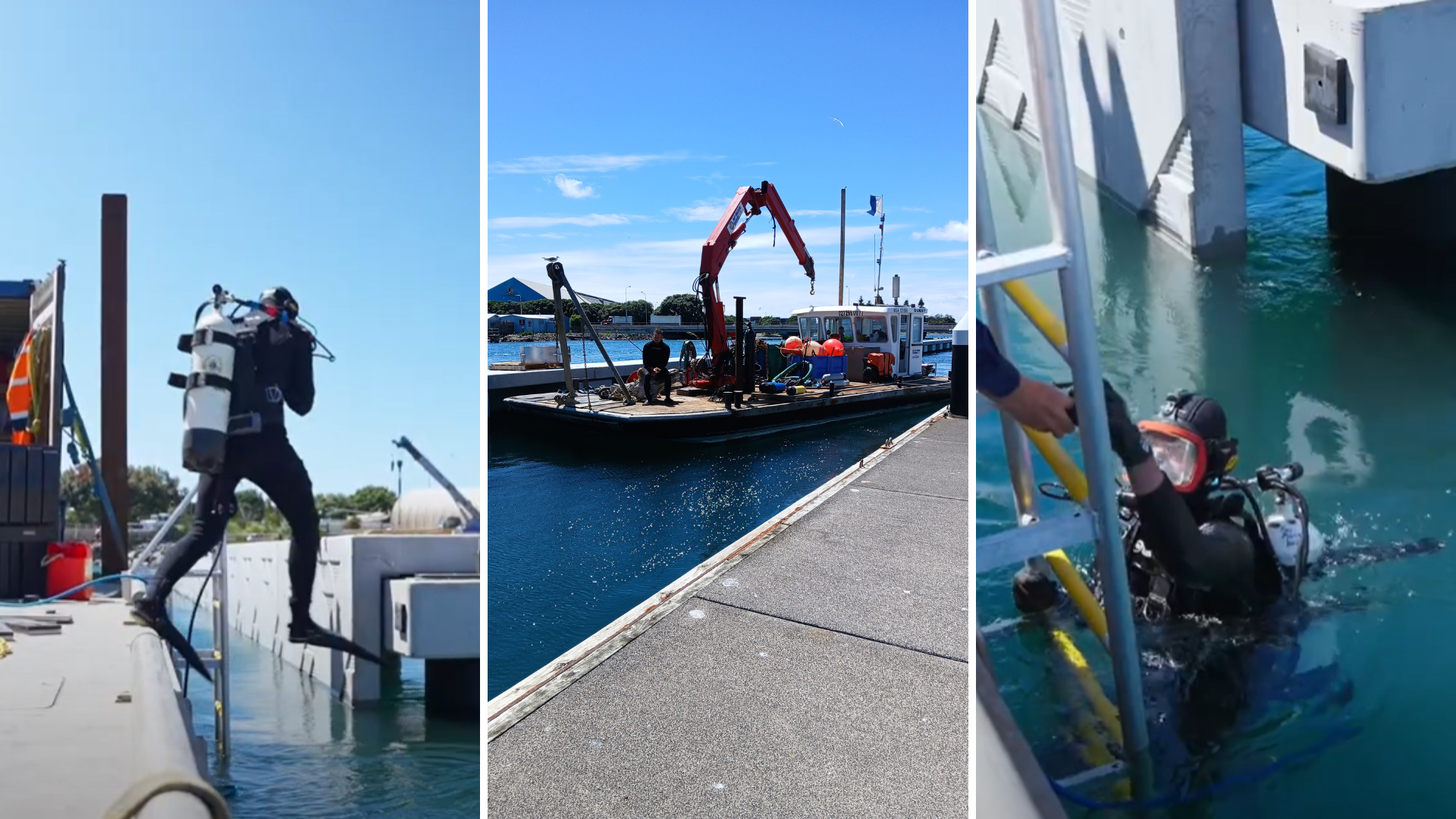
Timber Seawalls: Traditional timber seawalls using treated piles and horizontal sheathing remain an effective solution for many coastal protection applications. We drive piles to stable depth, install walings and capping, and construct timber faces that resist marine conditions for decades.
Rock Revetment: For larger coastal protection projects, rock revetment provides a natural-looking barrier against wave action. We specify appropriate rock sizing, construct filter layers to prevent undermining, and place rocks to achieve stable profiles that dissipate wave energy effectively.
Concrete Seawalls: Where vertical walls are required due to space constraints or specific engineering requirements, we construct reinforced concrete seawalls with proper foundations, drainage provisions, and tie-backs where necessary for stability.
Erosion Control: Beyond vertical walls, we implement erosion control solutions including rock groynes, beach nourishment support structures, and vegetated approaches that stabilise shorelines while maintaining environmental values.
Marina Construction & Pontoon Systems
Marinas require careful planning and specialised construction techniques to create functional, safe berthing for multiple vessels. We work with marina developers, boat clubs, and commercial operators to deliver complete marina solutions.
Pontoon Installation: Modern marinas use floating pontoon systems that rise and fall with tides. We install pontoons manufactured to your specifications, including pile guidance systems, anchor chains, and connections between pontoons. Our diving capabilities allow underwater inspection and adjustment of anchor systems to ensure long-term stability.
Finger Wharves & Berths: Individual berths require finger wharves with appropriate width for vessel access, utilities for power and water, and secure cleats or bollards. We construct finger wharves to consistent dimensions that maximise berth capacity while allowing safe vessel manoeuvring.
Marina Piling & Moorings: Pontoons require secure pile guidance systems or mooring anchors. We install these with proper spacing and strength calculations, and our diving team verifies underwater installations meet engineering specifications.
Service Pedestals: Modern marinas require electricity, water, and sometimes communications at each berth. We coordinate with electrical contractors to install service pedestals that provide reliable utilities in the harsh marine environment.
Pile Repair & Protection
Existing wharves, jetties, and marine structures require ongoing maintenance to extend their useful life. Our pile repair services address deterioration before it becomes structural failure.
Pile Wrapping & Jacketing: Timber and steel piles deteriorate over time, particularly in the tidal zone where marine borers, corrosion, and mechanical damage are most severe. We install protective pile wraps and jackets that encapsulate deteriorated sections, stopping further damage and restoring structural capacity.
Concrete Pile Repair: Concrete piles suffering from reinforcement corrosion or concrete spalling can be repaired using specialist marine concrete products. We remove damaged concrete, treat exposed reinforcement, apply corrosion inhibitors, and reconstruct pile sections with marine-grade repair mortars.
Pile Replacement: When piles are beyond economical repair, we replace them while supporting the existing structure. This involves temporary support installation, cutting and removing the damaged pile, driving a new pile, and reconnecting structural elements—work that requires coordination between diving and surface construction teams.
Structural Assessments: Before recommending repairs, we conduct thorough structural assessments using underwater inspections, non-destructive testing, and engineering analysis. Our reports document current condition, identify priorities for repair, and provide cost estimates for maintenance planning.
Bridge & Infrastructure Support
Bridges crossing waterways, causeways, and other infrastructure require specialised marine construction support. We work with engineering firms and construction companies to deliver the marine components of larger projects.
Bridge Pile Installation: Bridge piers require deep, stable piles often installed through water. We provide pile-driving services for bridge construction, working from our barges to achieve the precise positioning and depth required by engineering specifications.
Temporary Works in Water: Many infrastructure projects require temporary platforms, access jetties, or support structures during construction. We design and build temporary works that provide stable working platforms, then remove them after project completion with minimal environmental impact.
Scour Protection: Bridge piles and river crossings require protection from scour—erosion around foundations caused by water flow. We install rock armouring and mattressing systems that protect foundations while allowing water to flow naturally around structures.
Underwater Concrete Placement: Some structures require concrete placement below water level. We use tremie concrete placement techniques that deliver concrete underwater without contamination, forming solid foundations for piles or structures.
Navigation Aid Installation & Servicing
Safe navigation in harbours and coastal waters depends on properly installed and maintained navigation aids. We install and service navigation marks for harbour authorities, councils, and commercial operators.

- Channel Markers & Beacons: Pile-mounted navigation beacons marking channels, hazards, and safe water
- Solar-Powered Light Systems: Installation of solar lights and radar reflectors
- Mooring Buoys for Navigation: Large anchor systems and chains for channel marking buoys
- Maintenance & Inspection: Cleaning, repainting, light replacement, and structural repairs
- Underwater Anchor Placement: Diving team secures underwater components for navigation buoys
Mooring Infrastructure
Beyond our separate mooring services, we construct permanent mooring infrastructure for marinas, harbours, and private developments.
- Swing Mooring Systems: Underwater anchors (concrete blocks, screw anchors, or driven piles), chains, and surface buoys designed for specific vessel sizes
- Pile Moorings: Driven piles with pickup lines and vessel attachment fittings
- Mooring Grids: Multiple vessel mooring systems with appropriate spacing and capacity
- Alongside Berths: Piled berths with fenders, bollards, and weather protection
- Commercial Mooring Infrastructure: Heavy-duty systems for commercial vessel operations
Specialist Marine Structures
Our combined construction and diving capabilities allow us to deliver unique marine structures that other contractors can't handle. Tell us what you need on or in the water, and we'll make it happen.
- Pump Stations & Intake Structures: Water intake systems with screens, access platforms, and piping for industrial, aquaculture, or water supply applications
- Aquaculture Infrastructure: Feed stations, access platforms, and mooring systems for fish farms and mussel farms
- Boat Ramps: Concrete or precast ramps with proper gradient, non-slip surfaces, and erosion protection
- Diving Platforms: Swimming and training platforms with ladder access and safety features
- Fish Cleaning Stations: Marina cleaning facilities with water supply and waste management
- Custom Marine Structures: If it touches the water and you can describe it, we can build it
Our Marine Construction Process
When you engage Bay Marine Works for marine construction, here's what to expect:
Site Assessment & Consultation: We visit your site to understand conditions, access, tidal range, seabed characteristics, and environmental considerations. This informs our approach to the project and allows accurate quoting.
Engineering & Consents: For projects requiring engineering design or resource consents, we coordinate with engineers and work through consent processes. We manage applications for Bay of Plenty Regional Council, Tauranga City Council, and other authorities, ensuring your project meets all regulatory requirements.
Project Planning: We develop construction schedules considering tides, weather windows, equipment availability, and client requirements. Marine construction timing often depends on tidal conditions, and we plan work to maximise efficiency while working with nature.
Site Mobilisation: Our barges, workboats, diving equipment, and construction tools are transported to your site. For local projects, mobilisation is straightforward. For projects outside Tauranga, we transport our Webster barge and equipment by road to your location.
Construction Phase: Work proceeds according to the construction schedule, with regular communication about progress, any issues encountered, and adjustments needed. Our project managers ensure work meets specifications and timelines.
Quality Checks: Throughout construction, we inspect work for quality and compliance with engineering specifications. Our diving team can verify underwater components that other contractors can't inspect during construction.
Final Inspections & Handover: Once construction is complete, we conduct final inspections, coordinate any required independent inspections, and hand over completed structures with documentation for future maintenance.
Understanding Marine Construction Challenges
Marine construction presents unique challenges that land-based builders don't face. Understanding these helps explain our approach and the value of experienced marine contractors.
Tidal Influences: Work windows in tidal areas are limited to specific hours when water levels allow access or when low tide exposes work areas. We plan around tides to maximise productivity, but weather, tides, and sea conditions ultimately control the schedule.
Marine Borers & Deterioration: Timber structures in New Zealand waters face attack from marine borers including shipworm and gribble. We use properly treated timber, protective barriers, and construction details that minimise borer access. Steel faces corrosion challenges, particularly in the splash zone, requiring appropriate coating systems.
Wave & Current Forces: Structures in exposed locations must withstand significant wave energy and current forces. Engineering design accounts for these forces, but construction must properly implement design details including connections, bracing, and foundations.
Underwater Work Visibility: Visibility underwater in harbours and estuaries is often poor, requiring divers to work by touch rather than sight. This demands experienced commercial divers with tactile skills to achieve proper alignment and connections.
Environmental Considerations: Marine construction occurs in sensitive environments requiring careful management of sediment, contamination risks, and disturbance to marine life. We use turbidity curtains, timing work to avoid sensitive breeding periods, and implementing erosion and sediment control measures that protect water quality.
Access Challenges: Many marine construction sites have difficult land access, requiring all materials and equipment to arrive by water. Our barges and workboats provide the transport and working platforms needed for water-accessed sites.
Our Marine Construction Equipment
Professional marine construction requires professional equipment. Bay Marine Works maintains comprehensive equipment specifically designed for working on water.
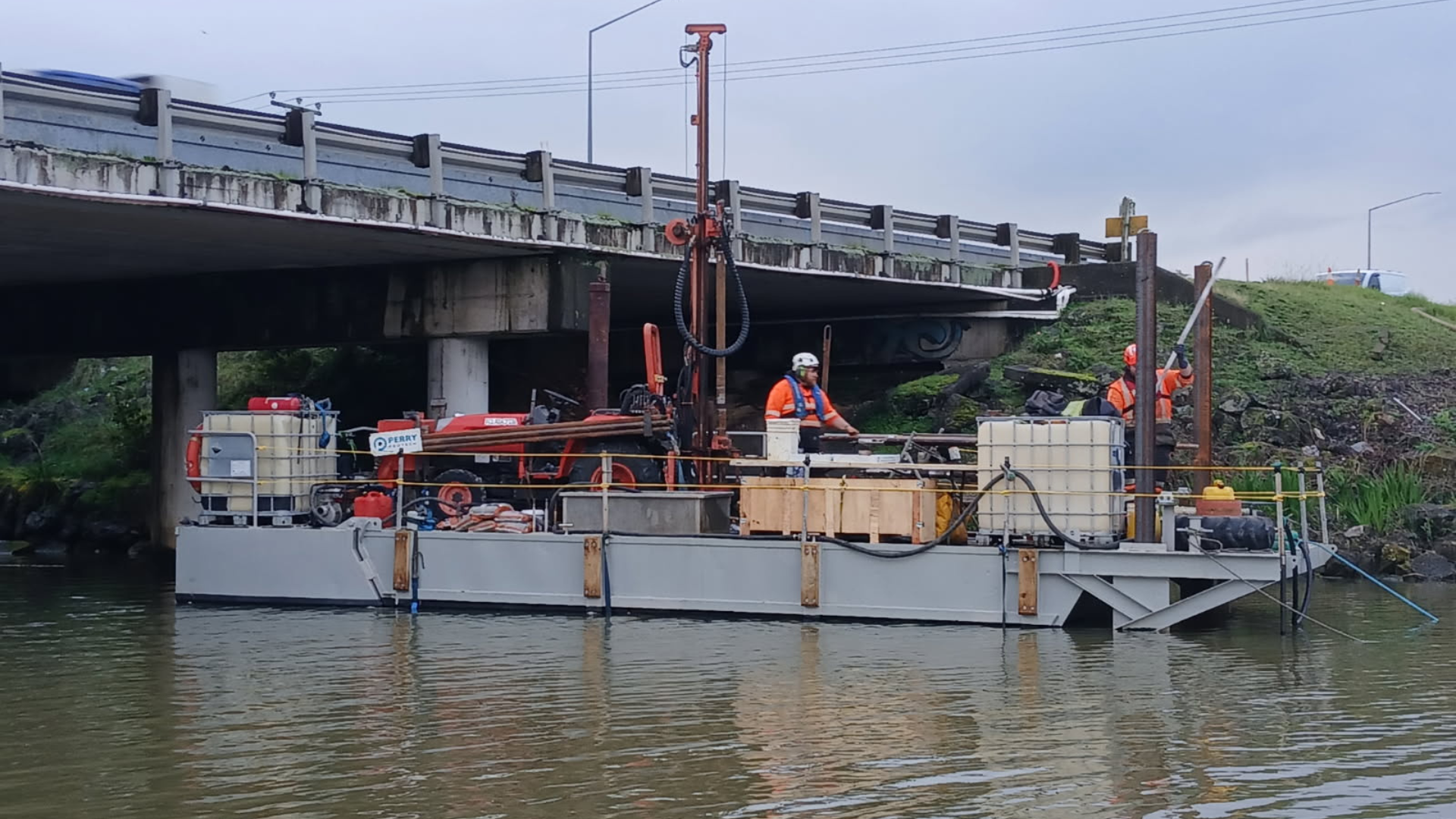
- Webster Barge: 10m x 3.5m steel drill barge with Palfinger crane and spud system—stable working platform, transportable nationwide
- Quest Crane Barge: 12m steel workboat with onboard crane, shallow draft, powerful propulsion for restricted waters
- Pile-Driving Equipment: Hydraulic and diesel hammers suitable for timber, steel, and concrete piles
- Commercial Diving Systems: ADAS Level 3 equipment including surface-supplied air, underwater power tools, and lifting equipment
- Survey & Positioning Equipment: GPS and traditional surveying for accurate structure positioning
- Workboats: Lady Kay II tug and smaller craft for transport and construction support
- All vessels operated by Maritime NZ certified skippers
Compliance & Standards
All marine construction work complies with relevant standards and regulations:
- Building Code Compliance: Structures meet requirements for structural adequacy, durability, and safety. We obtain building consents and arrange code compliance inspections.
- Resource Management Act: We manage regional council consent applications, implement consent conditions, and document compliance.
- Maritime Rules: Work complies with Maritime NZ rules including navigation safety and vessel operations.
- Health & Safety: Tōtika prequalified contractors with comprehensive H&S systems meeting infrastructure industry standards.
- Environmental Standards: Work meets regional council standards for water quality, marine ecology protection, and sediment control.
Project Examples
Bay Marine Works has delivered marine construction projects throughout the Bay of Plenty and across New Zealand:
- Tauranga Harbour Wharf Repair: Major pile repair and deck reconstruction for commercial wharf, coordinating with ongoing operations while replacing deteriorated components
- Bay of Plenty Marina Extension: Installation of additional pontoon berths including pile guidance systems and utility pedestals, increasing capacity without expanding footprint
- Coastal Seawall Construction: Design and build of timber seawall protecting residential property, including driven piles, sheathing, and integrated rock armouring
- Bridge Support Services: Pile installation and scour protection for transport infrastructure crossing tidal estuary
- Specialist Aquaculture Platform: Custom feed station platform with specific load capacity, chemical resistance, and daily access provisions
Who We Work With
Our marine construction services support a wide range of clients and project types:
Local & Regional Councils: Infrastructure projects for Tauranga City Council, Bay of Plenty Regional Council, and other territorial authorities requiring marine construction expertise.
Port Authorities: Construction support for Port of Tauranga and harbour authority projects including wharf maintenance, navigation aid installation, and marine infrastructure development.
Construction Companies: Marine construction components for major projects delivered by HEB Construction, Fulton Hogan, Conspec Construction, and other infrastructure contractors.
Engineering Firms: Implementation of designs for coastal engineers and marine structure specialists, providing the construction capability to realise engineered solutions.
Marina Developers: Complete marina construction including pile installation, pontoon systems, and utilities for private marina developments and boat club facilities.
Commercial Operators: Marine infrastructure for commercial operations including fuel supply wharves, industrial wharves, and specialist loading facilities.
Private Property Owners: Jetties, wharves, and coastal protection structures for residential waterfront properties throughout the Bay of Plenty.
Ready to Start Your Marine Construction Project?
Whether you're planning a small residential jetty, major commercial wharf, or specialist marine structure, Bay Marine Works has the expertise, equipment, and experience to deliver professional results. From concept through to completion, we manage marine construction projects with the attention to detail that only experienced marine contractors can provide.
Based in Tauranga and working throughout the Bay of Plenty and New Zealand, we're ready to discuss your marine construction needs.
Contact Bay Marine Works
Phone: 027 295 0077
Email: admin@baymarineworks.co.nz
Address: 10 Maru Street, Mount Maunganui, Tauranga, Bay of Plenty, 3116
Get in touch today to discuss your marine construction project and receive a detailed quote based on your specific requirements.
Case Study
Frequently Asked Questions
Do you provide engineering design or just construction?
We primarily provide construction services, but we work closely with marine engineers and can recommend qualified engineers for your project. For smaller structures, we can provide buildable designs based on proven details. Larger or more complex projects require independent engineering design, which we then construct to the engineer's specifications.
Do you obtain resource consents?
We can manage the consent application process on your behalf, working with planners and environmental consultants where required. For simple projects, we prepare consent applications directly. For complex projects, we coordinate with consent specialists to ensure applications properly address all regional council requirements.
How long does marine construction take?
Timeframes vary significantly depending on project size, complexity, weather, and consent requirements. A small residential jetty might be completed in a few weeks once consents are approved. Larger commercial projects can take several months. Tidal restrictions and weather windows mean marine construction generally takes longer than equivalent land-based work. We provide realistic timeframes during the quotation process.
Can you work in rough weather or high seas?
Safety is paramount. We don't work in conditions that pose risks to our crew or compromise construction quality. Rough weather delays construction, but most harbour and coastal construction occurs in relatively sheltered waters where weather windows are available regularly. We schedule projects to optimise good weather periods based on seasonal patterns.
Do you work outside the Bay of Plenty?
Absolutely. While based in Tauranga, we undertake marine construction projects throughout New Zealand. Our Webster barge is transportable by road, allowing us to mobilise to any location. We regularly work in Waikato, Auckland, and other regions requiring specialist marine construction capabilities.
Can you repair or upgrade existing structures?
Yes. We specialise in repairs, upgrades, and additions to existing wharves, jetties, and marine structures. This often presents more challenges than new construction because we must work around existing use, support structures during repair, and match new work to old. Our diving capabilities allow thorough assessment of underwater conditions before recommending repairs.
What's the difference between a wharf and a jetty?
The terms are often used interchangeably, but wharves typically refer to commercial or industrial structures designed for cargo, larger vessels, or intensive use. Jetties generally describe recreational or smaller access structures. Construction techniques are similar, but wharves require higher load capacity and more robust design. We build both to appropriate standards for their intended use.
Do you need to own waterfront property to build a jetty?
Generally yes—you need legal right to occupy the foreshore and seabed, typically through property ownership extending to the water, or a lease from the relevant authority. Resource consent processes verify your legal right before approving construction. We can advise on these requirements during initial consultation.
How long do marine structures last?
Properly constructed and maintained marine structures last decades. Well-treated timber in favourable conditions can last 40+ years. Steel structures with appropriate coating systems achieve similar lifespans. Concrete in the marine environment is very durable when properly specified and constructed. Regular maintenance extends structural life significantly—we provide maintenance recommendations with every project.
Can you work while we continue using existing facilities?
Often yes. We plan construction to minimise disruption to ongoing operations, working in stages or during quiet periods. For wharf repairs, we might work on sections while vessels continue using other areas. Communication during planning ensures our work schedule aligns with your operational requirements.
Do you handle demolition and removal of old structures?
Yes. We demolish derelict wharves, jetties, and marine structures, remove piles, and dispose of materials appropriately. This often combines surface cutting and lifting with diving operations to cut piles below waterline and recover underwater components. We manage disposal including hazardous materials where present in older structures.
What happens if you encounter unexpected conditions?
Marine construction sometimes reveals seabed conditions, deterioration, or other factors not evident during site assessment. When this occurs, we stop work, assess the situation, and discuss options with you before proceeding. Changes might affect cost or timeline, but we communicate openly and recommend solutions that address the situation properly.
Do you provide warranties on construction work?
Yes. We provide warranties covering workmanship and materials for periods appropriate to the project type—typically 12 months for standard construction, with longer warranties for specific components where applicable. This covers defects in our work, not wear from normal use or damage from third parties or extreme weather events.
Can you match historic construction styles?
For heritage structures or properties where matching existing character is important, we can replicate traditional construction details, use reclaimed timber where appropriate, and implement designs that respect historical appearance while meeting modern safety requirements. We balance heritage values with practical durability and regulatory compliance.
How much does marine construction cost?
Marine construction costs more than land-based equivalents due to specialised equipment, tidal restrictions limiting work hours, transport costs, and the harsh environment requiring durable materials. Simple residential jetties start from tens of thousands of dollars. Commercial wharves cost hundreds of thousands depending on size and capacity. We provide detailed quotes after site assessment so you understand the full scope and cost before committing.