
Marine Hazard Removal
Maritime NZ Regional Responders providing 24/7 marine hazard and debris removal across Tauranga and Bay of Plenty. Rapid response to logs, storm damage, oil spills, and navigational hazards nationwide.
Marine Hazard & Debris Removal Services in Tauranga & Bay of Plenty
24/7 Emergency Response for Harbour Safety & Environmental Protection
Bay Marine Works Ltd provides professional marine hazard and debris removal services throughout Tauranga Harbour, the Bay of Plenty, and across New Zealand. As Maritime NZ Regional Oil Spill Responders operating 24 hours a day, 365 days a year, we're the trusted partner for rapid response to floating debris, export logs, storm damage, oil spills, and navigational hazards that threaten harbour safety and marine operations.
When debris enters Tauranga Harbour or coastal waters—whether from storms, shipping incidents, or maritime accidents—every minute counts. Our experienced team mobilises immediately with specialised vessels, recovery equipment, and the expertise to safely remove hazards before they impact commercial shipping, recreational users, or the marine environment.
Why Choose Bay Marine Works for Marine Hazard Removal?
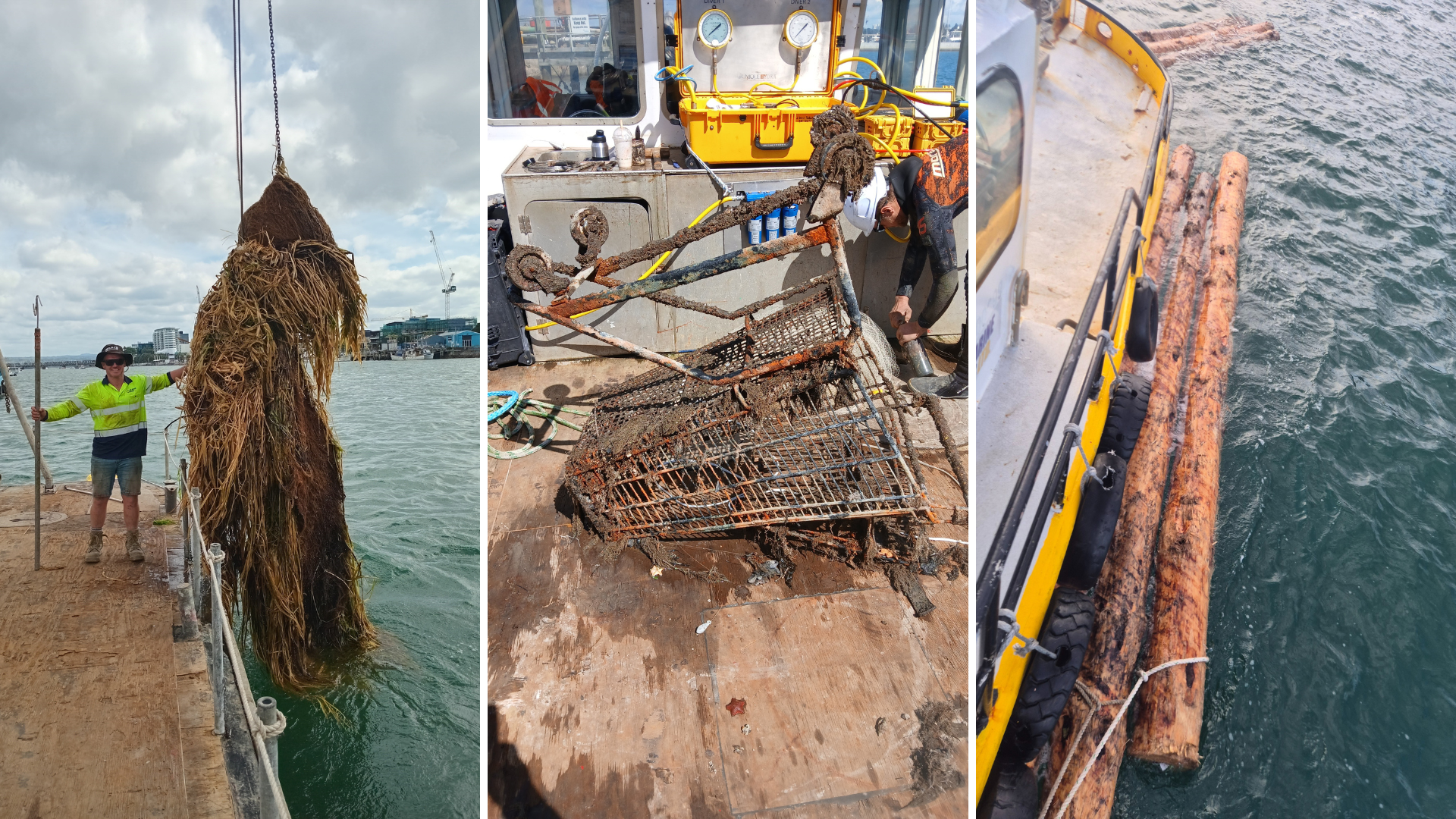
Marine debris isn't just an eyesore—it's a serious safety and environmental threat. Floating logs can damage vessels, storm debris blocks harbours and berths, and spilled cargo poses navigation hazards and pollution risks. As the authorised 24/7 debris removal service for Tauranga Harbour, we understand the urgency and have the resources to respond when it matters most.
What Sets Our Marine Hazard Removal Team Apart
24/7 Emergency Response
We're on call around the clock, every day of the year. When debris enters the harbour after storms, shipping incidents, or accidents, our team mobilises immediately—day or night, weekends or public holidays.
Maritime NZ Regional Responders
Our crew are trained and certified through the Maritime NZ Regional Oil Spill Response Course, ensuring we meet national standards for emergency response, oil spill containment, and hazardous material handling.
Specialised Vessel Fleet
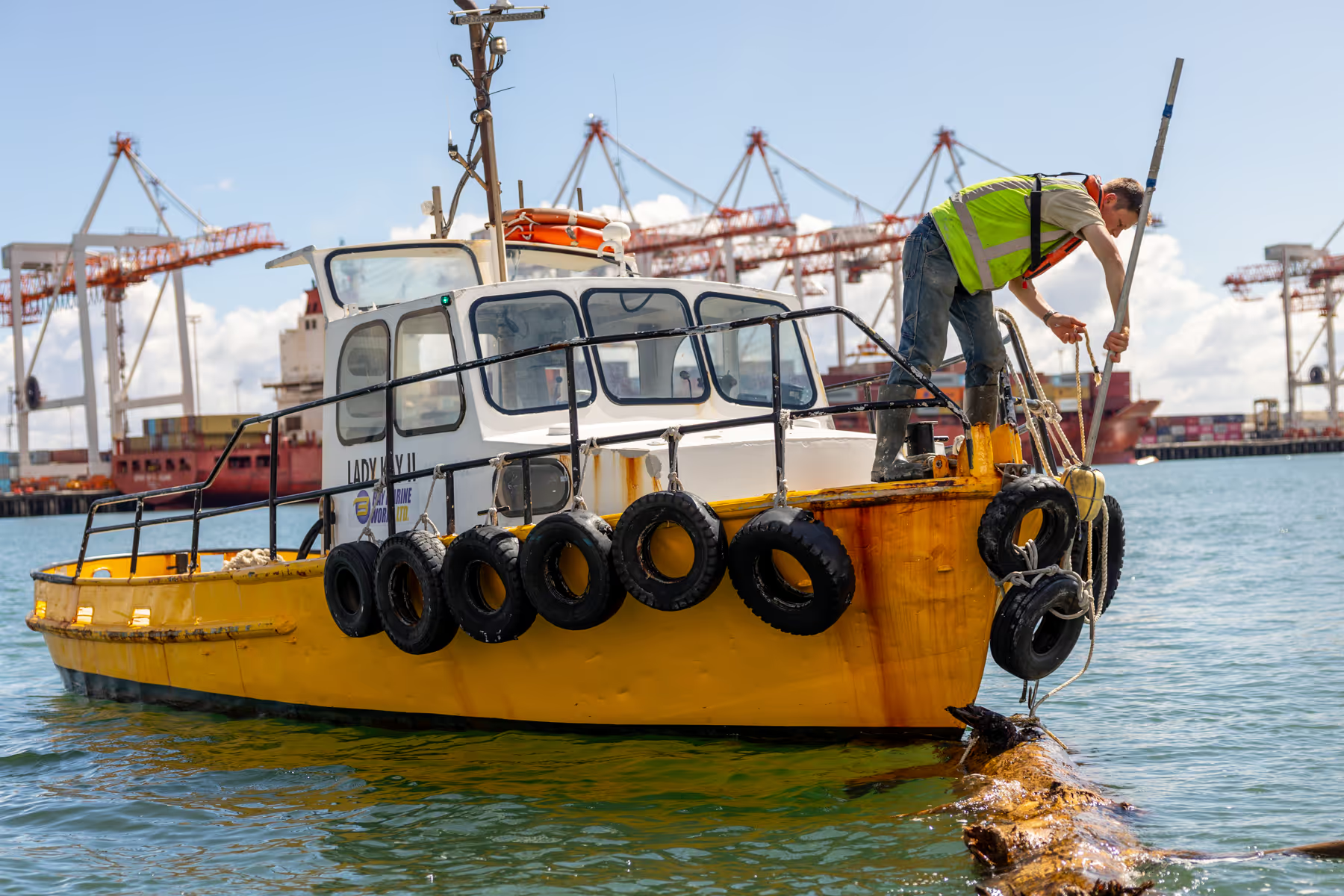
We operate a comprehensive fleet of workboats, tugs, and barges specifically equipped for debris recovery. From shallow-draft vessels for berths and beaches to our powerful Lady Kay II tug for heavy lifting, we have the right equipment for any situation.
Authorised Service Provider
Trusted by Bay of Plenty Regional Council, Maritime New Zealand and the Port of Tauranga for official debris removal operations in Tauranga Harbour and coastal waters.
Environmental Responsibility
We don't just remove debris—we ensure proper disposal, recycling where possible, and compliance with environmental regulations. Our Tier 1 oil spill response capability means we handle hazardous materials safely and effectively.
Proven Track Record
Trusted by major organisations including Port of Tauranga, NZTA, Z Energy, Mobil Oil NZ, Waste Management Oil Recovery and regional councils for maritime emergency response and hazard removal throughout New Zealand.
Our Marine Hazard Removal Services
Export Log & Floating Timber Recovery
Tauranga is New Zealand's largest export port, and occasionally logs escape during loading operations or storms. Floating timber poses serious navigation hazards and can damage vessels, infrastructure, and marine life.
What We Provide:
- 24/7 callout for floating log incidents in Tauranga Harbour
- Rapid location and recovery of escaped export logs
- Systematic harbour sweeps after storms or loading incidents
- Safe removal from shipping lanes, berths, and recreational areas
- Coordination with Port of Tauranga and Maritime NZ
- Documentation and reporting for incident records
Our team understands the commercial impact of log debris on port operations. We respond immediately to minimise disruption to shipping schedules and protect harbour users from hazards.
The Challenge: Export logs are heavy, waterlogged, and difficult to manoeuvre. They drift with tides and currents, making them unpredictable and dangerous for other vessels.
Our Solution: We use our tug Lady Kay II with towing capability, grappling equipment, and crane-equipped workboats to locate, secure, and recover logs efficiently. Our shallow-draft vessels access areas other boats can't reach, ensuring comprehensive clearance.
Storm Debris & Driftwood Removal
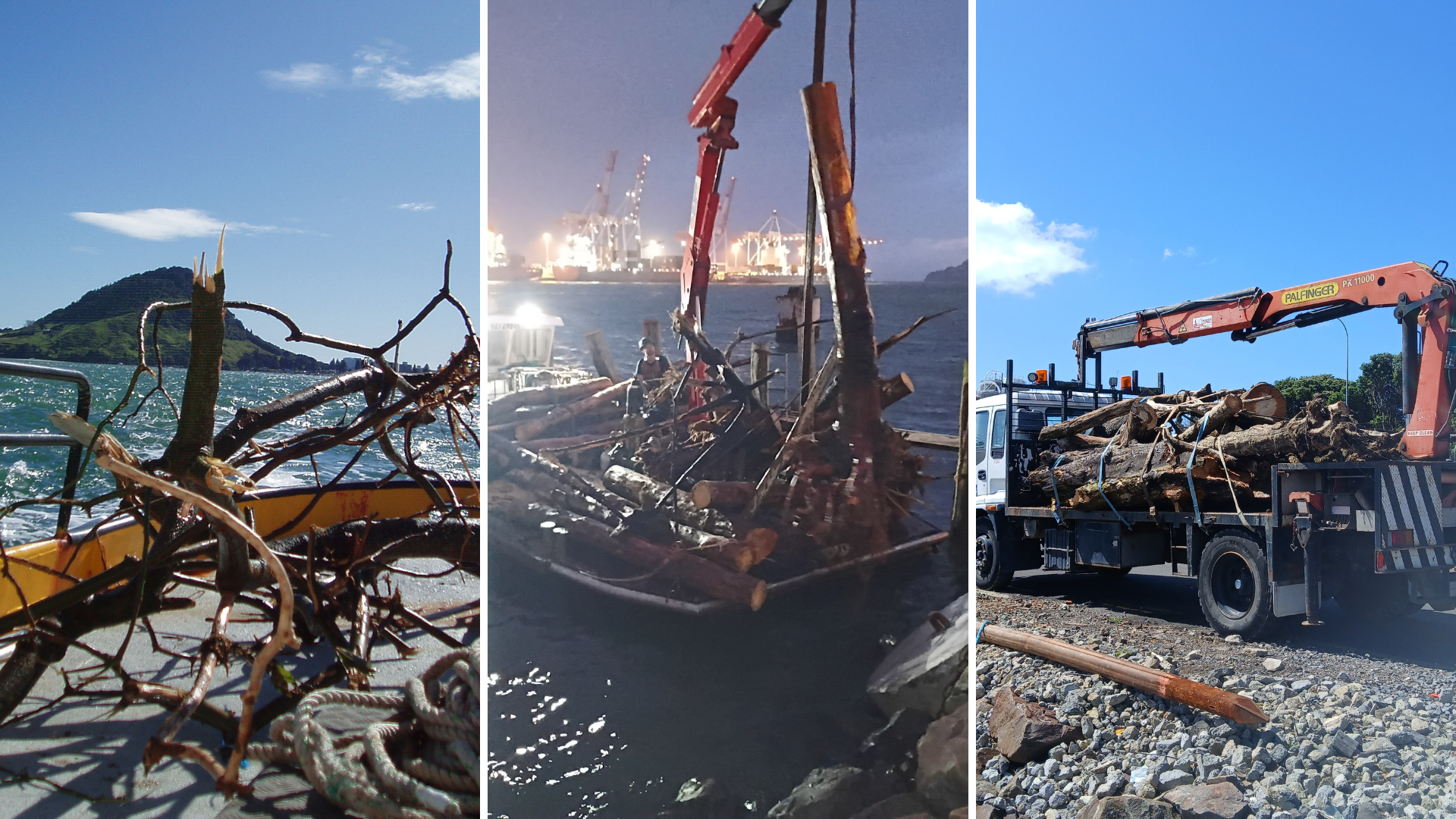
Severe weather and flooding bring significant debris into harbours and coastal waters. Driftwood, vegetation, household items, and construction materials create navigation hazards and environmental concerns.
Storm Debris We Remove:
- Driftwood and fallen trees from riverbanks and coastlines
- Vegetation debris including branches, roots, and organic material
- Household items washed into waterways during floods
- Construction materials and building debris
- Damaged pontoons, docks, and marine structures
- Plastic containers, barrels, and commercial packaging
Our Storm Response Process:
When storms hit and debris enters Tauranga Harbour, we mobilise our fleet for systematic clearance operations. We prioritise removal from shipping lanes and commercial berths, then expand to recreational areas and beaches. Our team works closely with councils and harbourmasters to coordinate effective clearance.
Following major storm events, we conduct comprehensive harbour sweeps to locate and remove debris before it settles, sinks, or causes damage. This proactive approach protects the harbour for all users.
Container & Cargo Recovery
Shipping incidents occasionally result in containers or cargo entering the water. These create significant navigation hazards, environmental risks, and legal complications requiring specialist recovery.
What We Handle:
- Floating shipping containers and cargo packages
- Semi-submerged containers posing navigation hazards
- Loose cargo from damaged or overturned containers
- Coordination with shipping companies and insurers
- Environmental assessment for contents
- Secure recovery and storage pending claim resolution
Container recovery requires careful planning, proper equipment, and coordination with multiple parties. We assess stability, buoyancy, and contents before executing safe recovery operations using our crane-equipped barges and towing vessels.
Oil Spill Response & Containment
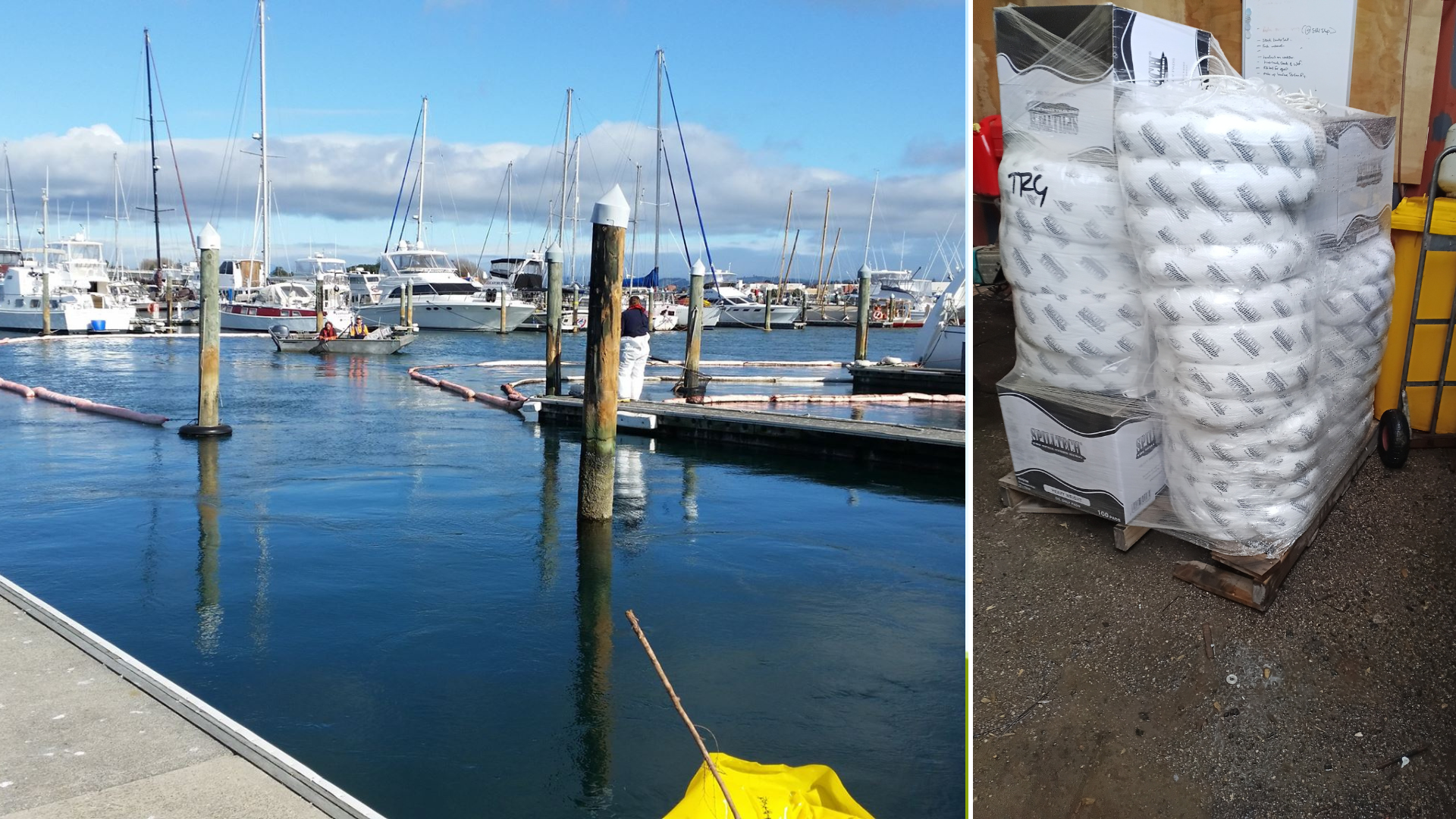
Bay Marine Works operates as a Tier 1 oil spill responder for Tauranga Harbour. Our Lady Kay II tug is designated as the 24/7 oil spill response vessel, ready to deploy boom, absorbent materials, and containment equipment at a moment's notice.
Our Oil Spill Capabilities:
- Immediate deployment of containment boom
- Oil absorbent material application and recovery
- Skimming operations for surface oil removal
- Coordination with Maritime NZ and regional councils
- Incident documentation and reporting
- Proper disposal of contaminated materials
Maritime NZ Regional Response Training: Our crew members are trained through the Maritime NZ Regional Response Course, giving them the knowledge and certification to respond to oil spills, chemical incidents, and hazardous material releases in harbour and coastal environments.
We understand that rapid response is critical to minimising environmental damage from oil spills. Our 24/7 readiness means we're on-scene quickly with proper equipment to contain and recover spilled fuel or oil before it spreads.
At Bay Marine Works, we run on-water oil-spill training exercises tailored for companies that transport oil or fuel through the Port of Tauranga. By holding these annual drills, we make sure staff are fully prepared: ready to jump into action, understand the correct procedures, and confidently coordinate a response in the unlikely event of a spill. It’s all about safety, readiness, and protecting our coastal waters and marine environment.
Navigational Hazard Removal
Any object that creates a danger to navigation—whether floating, semi-submerged, or just below the surface—requires immediate attention and professional removal.
Hazards We Remove:
- Floating pontoons and damaged marina infrastructure
- Loose moorings and anchor tackle
- Plastic drums, buoys, and flotation devices
- Fishing gear including nets, pots, and floats
- Construction materials and building supplies
- Any debris posing collision or entanglement risk
We work closely with harbourmasters and Maritime NZ to identify, mark, and remove navigation hazards. For semi-submerged or underwater hazards, our commercial diving team can inspect, secure, and assist with recovery operations.
Hazardous Material Removal
When debris includes hazardous materials—chemicals, fuels, batteries, or contaminated items—specialised handling is essential to protect crews and the environment.
Our Hazmat Capabilities:
- Identification and assessment of hazardous materials
- Safe containment and recovery procedures
- Proper personal protective equipment for crew safety
- Coordination with environmental authorities
- Certified disposal through authorised facilities
- Documentation for regulatory compliance
Our Maritime NZ Regional Response training includes hazardous material recognition and response protocols. We don't take risks with unknown substances—we assess, contain, and handle materials following proper procedures to protect our crew and the marine environment.
Beach & Foreshore Clearance
Debris washing ashore creates environmental concerns, wildlife hazards, and impacts recreational beach users. We provide comprehensive beach clearance services for councils and private landowners.
Foreshore Services:
- Beach debris removal after storms or incidents
- Collection of marine plastics and microplastics where practical
- Removal of large driftwood and timber
- Clearance of recreational areas and reserves
- Access with shallow-draft vessels for remote locations
- Proper sorting for recycling and disposal
Our shallow-draft vessels like Mary S (0.25m draft) can access beaches and foreshore areas that larger vessels cannot reach. This gives us flexibility to clear debris from hard-to-reach locations along the Tauranga coastline and beyond.
Our Emergency Response Process
When marine debris threatens harbour safety or operations, here's how Bay Marine Works responds:
- Emergency Call Received (24/7): Contact us on 0223082292 any time, day or night. Our duty skipper is on call and ready to respond immediately.
- Initial Assessment: We gather information about the debris type, location, quantity, and any immediate hazards. This helps us mobilise the right vessels and equipment.
- Rapid Mobilisation: Our response time depends on location and conditions, but we typically have vessels underway within one to two hours of callout for Tauranga Harbour incidents.
- On-Scene Coordination: We coordinate with harbourmasters, Maritime NZ, councils, and other authorities as required. Safety is always our priority.
- Debris Recovery Operations: Using appropriate vessels and equipment, we systematically locate, secure, and recover debris. Our experienced skippers ensure safe operations in all conditions.
- Proper Disposal: Recovered debris is transported to shore and disposed of properly—recycling where possible, hazardous waste to certified facilities, and general waste to approved sites.
- Documentation & Reporting: We provide detailed reports including photographs, GPS locations, quantities recovered, and disposal documentation for council records and insurance purposes.
Our Marine Hazard Removal Fleet
Professional debris removal requires proper equipment. Bay Marine Works operates a comprehensive fleet specifically configured for debris recovery and emergency response.
Lady Kay II: Emergency Response Tug
- 8.8m steel tug/workboat
- 90kW diesel engine with shaft drive
- Designated 24/7 oil spill response vessel for Tauranga Harbour
- Heavy towing capability for large debris and logs
- Oil spill response equipment onboard
- VHF communication and GPS navigation
- Operated by Maritime NZ certified skippers
Lady Kay II is our primary emergency response vessel. Built in 1965 and proven over decades of harbour operations, this powerful tug handles heavy debris recovery and is always ready for immediate callout.
Quest: Crane-Equipped Workboat
- 12m steel workboat/barge
- Highly manoeuvrable and seaworthy design
- 141kW diesel power with stern drive
- Palfinger crane for lifting heavy debris
- Shallow draft for berth and foreshore access
- Excellent working platform for crew safety
- Surveyed for North Island enclosed waters
Quest's combination of crane capability, manoeuvrability, and working space makes it ideal for debris recovery operations requiring lifting equipment. We use Quest for container recovery, heavy driftwood, and large floating objects.
Webster: Transportable Drill Barge
- 10m x 3.5m steel construction
- Palfinger crane and spud system
- 10 tonne capacity
- Shallow draft dunne barge
- Transportable nationwide by truck
- Stable platform for heavy operations
When debris recovery requires a stable working platform with heavy lifting capability, Webster provides the solution. This barge can be transported to remote locations throughout New Zealand for major clearance operations.
Grampus: Aluminium Workboat
- Aluminium trailer workboat
- 115HP Yamaha outboard
- Trailerable for rapid deployment
- Excellent for remote location access
- Shallow water capability
Grampus gives us rapid deployment capability anywhere in New Zealand. We can have this vessel on-site quickly for remote harbour clearance or coastal debris recovery operations.
Mary S: Shallow-Draft Workboat
- 4.3m aluminium (4mm) construction
- 60HP Yamaha outboard
- Only 0.25m draft
- Perfect for beach and foreshore work
- Access to shallow berths and marinas
Mary S reaches areas other vessels cannot access. With only 250mm draft, this shallow-water specialist clears debris from beaches, foreshore areas, and tight marina berths where larger vessels can't operate.
Who We Work With
Our marine hazard removal services support a wide range of organisations throughout New Zealand:
- Port & Harbour Authorities: Port of Tauranga, harbourmasters, and shipping operators requiring rapid debris clearance to maintain commercial operations
- Local & Regional Councils: Tauranga City Council, Bay of Plenty Regional Council, Waikato Regional Council for harbour management and environmental response
- Maritime NZ: Coordination of regional response operations, oil spill incidents, and navigation hazard removal
- Shipping Companies: Container recovery, cargo incidents, and vessel-related debris cleanup
- Fuel & Energy Companies: Z Energy, Mobil Oil NZ, McFall Fuel for fuel spill response and containment
- Infrastructure Agencies: NZTA, Waste Management for transport and environmental incidents
- Private Vessel Owners: Marina operators, yacht clubs, and boat owners affected by storm debris
Why Immediate Response Matters
Marine debris and hazards don't wait for business hours, and neither do we. Here's why rapid response is critical:
Commercial Impact
Floating debris in shipping lanes or berths disrupts port operations costing thousands of dollars per hour. Rapid clearance minimises financial impact on shipping schedules and port productivity.
Safety Risk
Floating logs, containers, and semi-submerged debris pose collision risks to commercial and recreational vessels. Prompt removal prevents accidents, vessel damage, and potential injuries.
Environmental Protection
Oil spills spread rapidly. Storm debris contains contaminants. Hazardous materials leak into water. The faster we respond, the less environmental damage occurs.
Legal Compliance
Shipping companies, port operators, and councils have legal obligations to maintain safe navigation and respond to hazards. Our 24/7 service ensures compliance with Maritime NZ regulations.
Community Benefit
Clean harbours and beaches benefit everyone—commercial operators, recreational users, tourism, and marine life. Prompt debris removal protects these shared resources.
Safety & Environmental Responsibility
Marine debris removal isn't just about getting objects out of the water—it's about doing so safely and responsibly.
Our Safety Standards:
- All vessels operated by Maritime NZ certified skippers
- Comprehensive safety equipment including life jackets, communications, and emergency gear
- Risk assessments before operations commence
- Weather and tide monitoring for safe operating conditions
- Proper personal protective equipment for hazardous material handling
- Oxygen administration and first aid certified crew
Environmental Commitment:
- Proper disposal through authorised facilities
- Recycling of timber, metals, and materials where possible
- Hazardous waste to certified disposal contractors
- Oil spill containment to minimise environmental damage
- Documentation for regulatory compliance and environmental reporting
- Collaboration with regional councils on environmental protection
24/7 Emergency Response Contact
When marine debris threatens harbour safety, vessel operations, or the environment, every minute counts. Bay Marine Works responds immediately to emergency callouts throughout Tauranga Harbour, the Bay of Plenty, and across New Zealand.
Case Study
Real-World Response: Major Storm Debris Recovery
Following a severe storm that brought significant flooding to the Bay of Plenty, massive volumes of driftwood, vegetation debris, and household items washed into Tauranga Harbour. The debris posed navigation hazards to commercial shipping and blocked several recreational berths.
.png)
The Challenge:
Bay Marine Works received multiple callouts over 48 hours as debris continued entering the harbour. The priority was clearing commercial shipping lanes and berths first, then expanding to recreational areas and beaches. The sheer volume required systematic operations and multiple vessel deployments.
Our Response:
- Mobilised Lady Kay II, Quest, and Mary S simultaneously for maximum coverage
- Coordinated with Port of Tauranga and Maritime NZ for shipping lane priorities
- Systematic harbour sweeps from commercial areas outward to beaches
- Round-the-clock operations with crew rotations for continuous coverage
- Recovered tonnes of driftwood, vegetation, and debris over four days
- Proper sorting and disposal through approved facilities
The Outcome:
Commercial shipping operations continued with minimal disruption. Recreational areas were cleared within a week. The harbour was restored to safe navigation for all users. Bay of Plenty Regional Council commended our rapid and effective response.
This incident demonstrates why having dedicated 24/7 marine hazard removal capability matters. The faster debris is removed, the less impact on harbour operations, safety, and the environment.
Frequently Asked Questions
How quickly can you respond to emergency callouts?
For Tauranga Harbour incidents, we typically mobilise within one to 30 to 60 minutes of receiving the call, depending on crew location and vessel readiness. We're on call 24/7, including weekends and public holidays. For locations outside Tauranga, response time depends on distance and equipment transport requirements.
What areas do you cover for marine debris removal?
We're based in Tauranga and cover the entire Tauranga Harbour, Bay of Plenty coastal waters, and can deploy nationwide for major incidents. Our trailerable vessels extend our reach to remote locations throughout New Zealand.
Who pays for debris removal operations?
It depends on the situation. For incidents involving identifiable responsible parties (shipping companies, vessel owners, cargo owners), costs are typically recovered from those parties or their insurers. For storm debris and public hazards, councils or maritime authorities may commission removal services. We work with all parties to ensure proper cost allocation.
Can you remove debris in rough weather conditions?
Safety is our priority. We assess weather and sea conditions before operations. Our vessels are seaworthy and our skippers experienced, but we won't compromise crew safety. If conditions are unsafe, we'll wait for improvements or recommend alternative approaches. That said, our fleet handles challenging conditions that would prevent many operators from working.
What happens to debris after you recover it?
We transport recovered debris to shore and dispose of it properly. Timber and metals are recycled where possible. Hazardous materials go to certified disposal facilities. General waste goes to approved sites. We provide documentation of disposal for compliance and insurance purposes.
Do you work with insurance companies?
Yes. We provide detailed documentation including photographs, GPS locations, quantities recovered, time records, and disposal receipts. This documentation supports insurance claims and cost recovery. We're experienced in working with marine insurers and understand their requirements.
Can you handle oil spills and hazardous materials?
Yes. We're trained Maritime NZ Regional Responders with Tier 1 oil spill response capability. Our Lady Kay II is designated as the 24/7 oil spill response vessel for Tauranga Harbour. We have boom, absorbent materials, and proper equipment. For larger spills, we coordinate with Maritime NZ and regional councils for appropriate resources.
How do you coordinate with Port of Tauranga and Maritime NZ?
We have established relationships and communication protocols with port authorities and Maritime NZ. For incidents in commercial shipping areas, we coordinate priorities and timing to minimise disruption. We understand harbour operations, shipping schedules, and regulatory requirements.
What types of debris are most common in Tauranga Harbour?
The most common debris we remove includes driftwood and fallen trees after storms, export logs that occasionally escape during loading operations, plastic containers and drums, fishing gear, damaged moorings and marina equipment, and household items washed into the harbour during flooding events.
Can you remove debris from beaches and foreshore areas?
Yes. Our shallow-draft vessels like Mary S (0.25m draft) can access beaches and foreshore areas to remove debris that's washed ashore. We work with councils and private landowners for beach clearance after storms or incidents.